From professional athletes to wellness enthusiasts, contrast showers have become one of the fastest-growing recovery habits. By alternating between hot and cold water, many people hope to improve recovery, increase energy, and build resilience—all in just a few minutes.
But do they actually work?
Here’s what the science says.
What Is a Contrast Shower?
A contrast shower alternates between periods of warm and cold water. Unlike a cold plunge, which uses only cold exposure, contrast showers repeatedly switch between temperatures.
A common protocol is:
60–90 seconds warm
30–60 seconds cold
Repeat 3–5 times
Finish with cold (optional)
The entire routine typically takes less than 10 minutes.
1. They May Improve Circulation
Alternating between hot and cold water causes your blood vessels to repeatedly dilate and constrict.
Warm water encourages vasodilation, while cold water causes vasoconstriction. Although the idea that this “flushes toxins” isn’t supported by strong evidence, these temperature changes do increase blood flow to the skin and create noticeable cardiovascular responses.
Many people report feeling refreshed and energized afterward.
2. They Can Help You Feel More Alert
Cold water stimulates the sympathetic nervous system, increasing alertness and helping many people feel awake almost immediately.
This is one reason contrast showers have become popular as part of a morning routine instead of reaching for another cup of coffee.
3. They May Support Recovery After Exercise
Cold water immersion has been studied more extensively than contrast showers, with evidence suggesting it can reduce muscle soreness after intense exercise.
Research on contrast water therapy is more mixed, but some studies suggest alternating temperatures may help reduce perceptions of soreness and improve recovery following strenuous activity.
4. They Help You Practice Stress Resilience
One of the biggest benefits may have nothing to do with muscles.
Stepping into cold water is uncomfortable—but voluntarily experiencing short periods of discomfort can become a form of mental training.
Over time, many people report becoming more comfortable managing discomfort and stress in other areas of life.
5. They Pair Well With Breathwork
Many people naturally hold their breath or tense up when cold water hits.
Practicing slow, controlled breathing during the cold portion of a contrast shower can help you stay calm instead of reacting automatically.
This makes contrast showers an excellent opportunity to train both your body and your nervous system at the same time.
Are Contrast Showers Better Than Cold Showers?
Not necessarily—they simply have different advantages.
Cold showers provide continuous cold exposure and are often chosen by people seeking a stronger physiological challenge.
Contrast showers are generally more approachable for beginners and may be easier to incorporate into a daily routine because the warm intervals make the experience more comfortable.
The best option is the one you’ll do consistently.
Best Practices
If you’re just starting:
Begin with warm water.
Add 20–30 seconds of cool water.
Gradually increase the cold duration over time.
Focus on slow, controlled breathing.
Stop if you feel dizzy or unwell.
People with certain cardiovascular conditions or other medical concerns should speak with a healthcare professional before beginning cold exposure.
Are They Worth It?
If you’re looking for a quick habit that can leave you feeling more awake, support post-exercise recovery, and help you practice staying calm under mild stress, contrast showers are worth trying.
While more research is still needed in some areas, they’re inexpensive, accessible, and easy to incorporate into a daily routine. Like most wellness habits, the biggest benefits are likely to come from consistency rather than intensity.
Make Contrast Showers Easy to Stick With
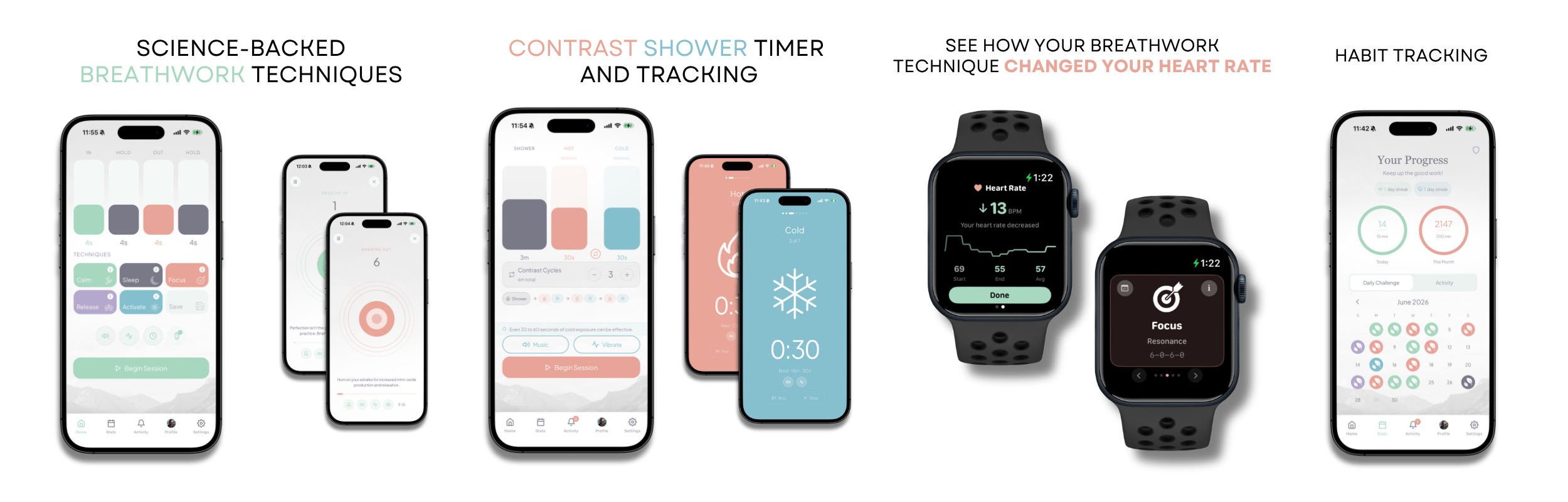
If you want to build a consistent contrast shower routine, re-zen: Nervous System Reset includes a guided contrast shower timer that tells you exactly when to switch between hot and cold water, so you don’t have to watch the clock.
You can also pair your shower with science-backed guided breathwork, track your progress with habit calendars, build streaks, and stay motivated through the app’s community features—all designed to help you turn small daily habits into lasting improvements in your health and well-being.