For most people, the Apple Watch is a fitness tracker.
It counts steps, records workouts, tracks sleep, and measures heart rate.
But one of its most powerful uses is often overlooked: helping you actively manage stress.
Instead of simply showing you how your body is responding to stress, your Apple Watch can become a tool for training your nervous system and building healthier daily habits.
Here’s how.
1. Pay Attention to Your Heart Rate
Stress doesn’t just affect how you feel—it affects how your body functions.
When you’re under pressure, your heart rate often rises as your sympathetic (“fight or flight”) nervous system becomes more active.
Your Apple Watch makes it easy to recognize these moments throughout the day.
Simply noticing that your heart rate is elevated can be a reminder to pause, take a breath, and reset before stress continues to build.
2. Practice Guided Breathing Instead of Waiting for Stress to Pass
Many people only think about stress after they’re already overwhelmed.
A better approach is to proactively regulate your nervous system with slow, controlled breathing.
Techniques like:
Coherence breathing
Box breathing
4-7-8 breathing
Physiological sigh
Deep breathing
can all help create a calmer physiological state when practiced consistently.
Just five minutes can become a meaningful reset during a busy day.
3. Watch Your Heart Rate Respond in Real Time
One of the most motivating aspects of stress regulation is seeing your body respond.
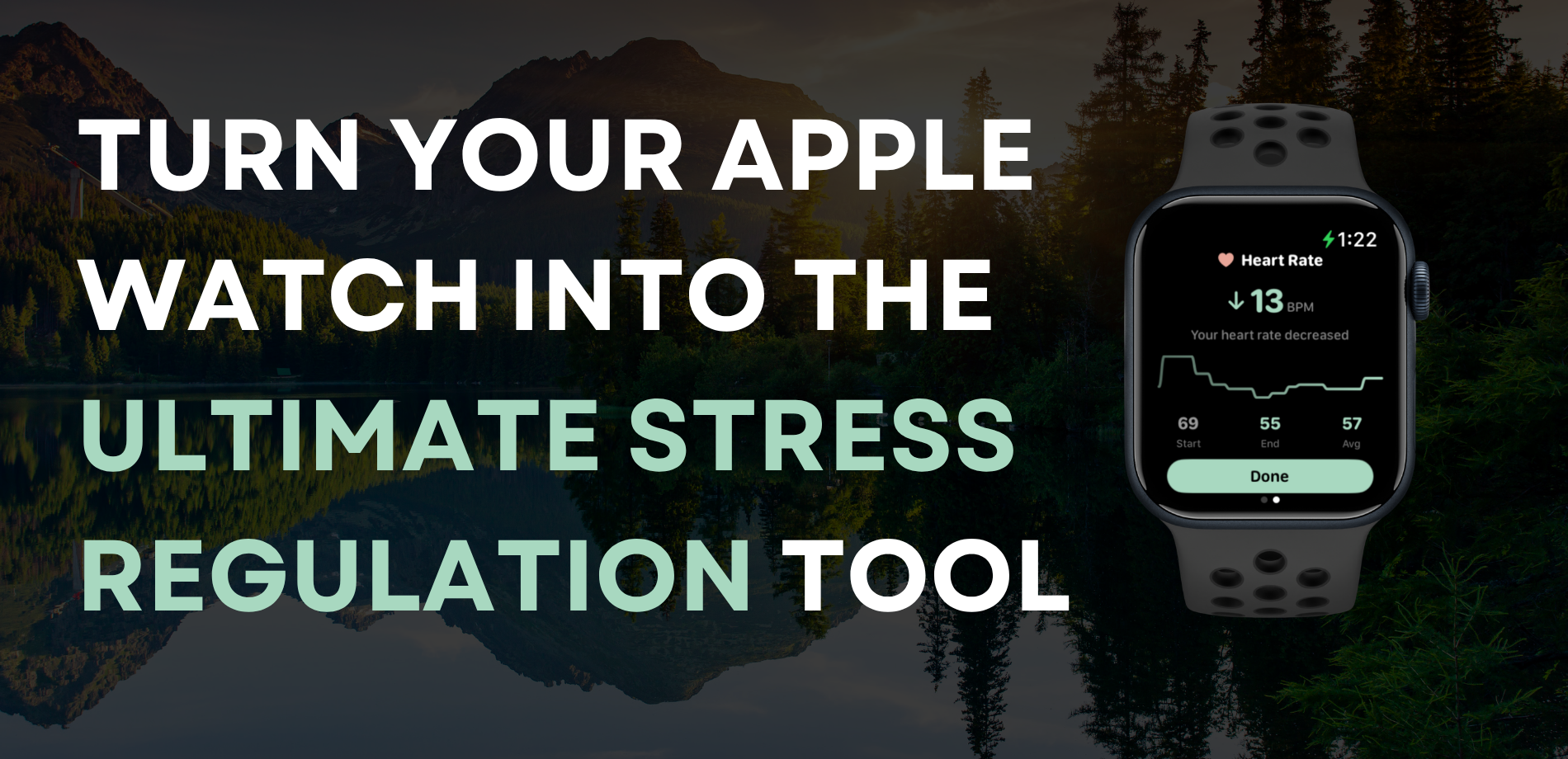
Instead of wondering whether your breathing exercise is working, watching your heart rate gradually decrease during a session provides immediate feedback that your body is relaxing.
That visual feedback often makes people more likely to stick with the habit.
4. Use Stress Breaks Throughout the Day
Stress doesn’t have to build until bedtime.
Try scheduling a five-minute reset:
Before an important meeting
After a stressful phone call
During lunch
Before leaving work
Before bed
Small interruptions throughout the day often prevent stress from accumulating.
5. Build Habits Instead of Relying on Motivation
The most effective stress management strategy isn’t finding the perfect breathing exercise.
It’s making stress regulation something you do automatically.
Daily reminders, streaks, and progress tracking make it much easier to stay consistent than relying on motivation alone.
Over time, those small habits become part of your routine.
6. Look at Trends, Not Individual Days
Everyone has stressful days.
Rather than focusing on a single high heart rate or restless night, use your Apple Watch to notice patterns.
Ask yourself:
Do I feel calmer after breathing exercises?
Is my resting heart rate improving over time?
Am I sleeping more consistently?
Do I recover more quickly after stressful days?
Those long-term trends are often more meaningful than any one measurement.
Take Your Apple Watch One Step Further
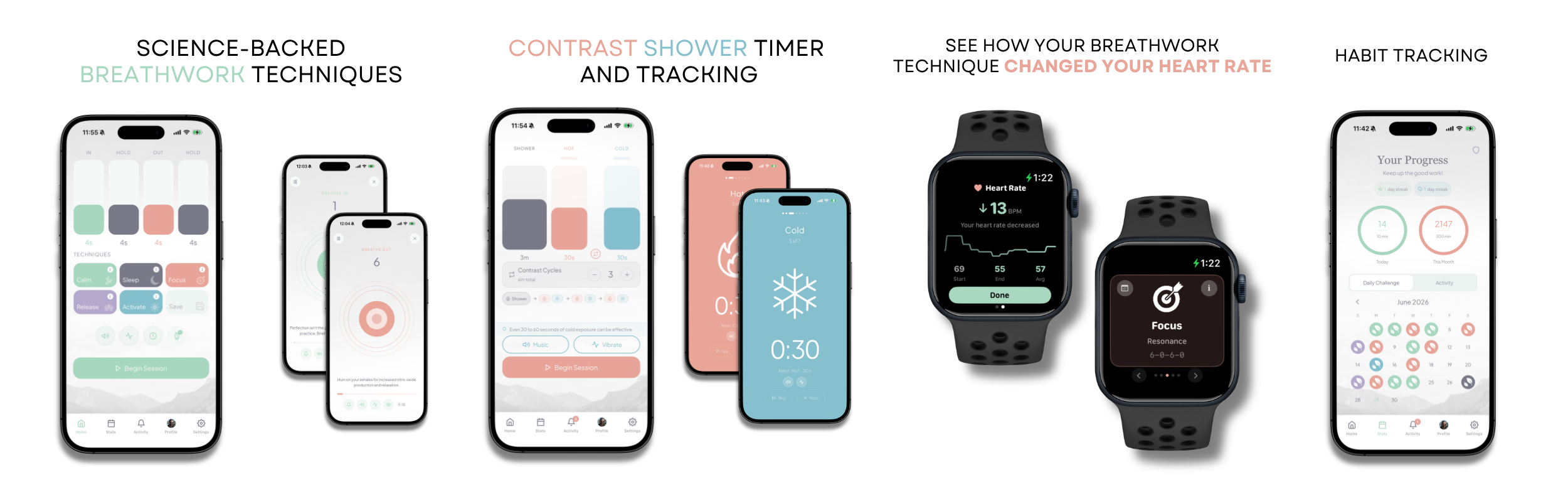
re-zen: Nervous System Reset transforms your Apple Watch into an active stress regulation tool.
Along with science-backed guided breathing sessions, the companion Apple Watch app lets you watch your heart rate change in real time, helping you see the immediate effects of slowing your breathing. The app also includes guided journaling, a contrast shower timer, habit tracking, progress calendars, share cards, and a community feed to make building healthy habits easier—and more rewarding.
Your Apple Watch already measures your health.
re-zen helps you improve it.