Breathwork isn’t one-size-fits-all. Different breathing techniques create different physiological responses, which means the best exercise depends on what you’re trying to accomplish.
Whether you’re trying to calm down after a stressful moment, improve focus before an important meeting, or prepare your body for sleep, choosing the right breathing technique can make all the difference.
Here’s a practical guide to when each type of breathwork works best.
If You’re Feeling Overwhelmed or Panicked: Physiological Sigh
When stress suddenly spikes, you need something fast.
The physiological sigh consists of two quick inhales followed by one long, slow exhale. Research suggests this breathing pattern can help reduce physiological arousal and may provide quick relief during moments of acute stress.
Best for:
Feeling overwhelmed
Acute stress
Before a difficult conversation
Regaining composure
Time: 30 seconds–2 minutes
If You Need to Focus: Box Breathing
Box breathing uses equal-length inhales, holds, exhales, and holds to create a steady rhythm.
It’s widely used by military personnel, first responders, athletes, and professionals because it encourages calm without making you sleepy.
Best for:
Before meetings
Public speaking
Studying
Working
Managing everyday stress
Time: 3–5 minutes
If You Want to Feel Calm Throughout the Day: Coherence Breathing
Coherence breathing emphasizes slow, even breaths that many people find relaxing and easy to maintain.
It’s an excellent daily practice for slowing down, improving focus, and creating a sense of balance during a busy day.
Best for:
Midday resets
Daily stress management
Relaxation
Transitioning between work and home
Time: 5–10 minutes
If You’re Trying to Fall Asleep: 4-7-8 Breathing
One of the most popular breathing techniques for bedtime is 4-7-8 breathing.
Many people use it as part of a nightly wind-down routine because the slow pace encourages relaxation and helps shift attention away from racing thoughts. Practicing for just a few minutes before bed can become an effective cue that it’s time to sleep.
Best for:
Bedtime
Racing thoughts
Relaxing before sleep
Lowering physiological arousal
Time: 5 minutes
If You Want More Energy: Activate Breathwork
Not all breathwork is designed to calm you down.
Faster-paced breathing combined with structured breath holds can leave many people feeling energized, alert, and mentally refreshed. This style of breathwork is often practiced in the morning, before workouts, or before cold exposure.
Best for:
Morning energy
Before exercise
Cold exposure
Mental alertness
Building resilience
Time: 5–10 minutes
Practice Every Technique in One Place
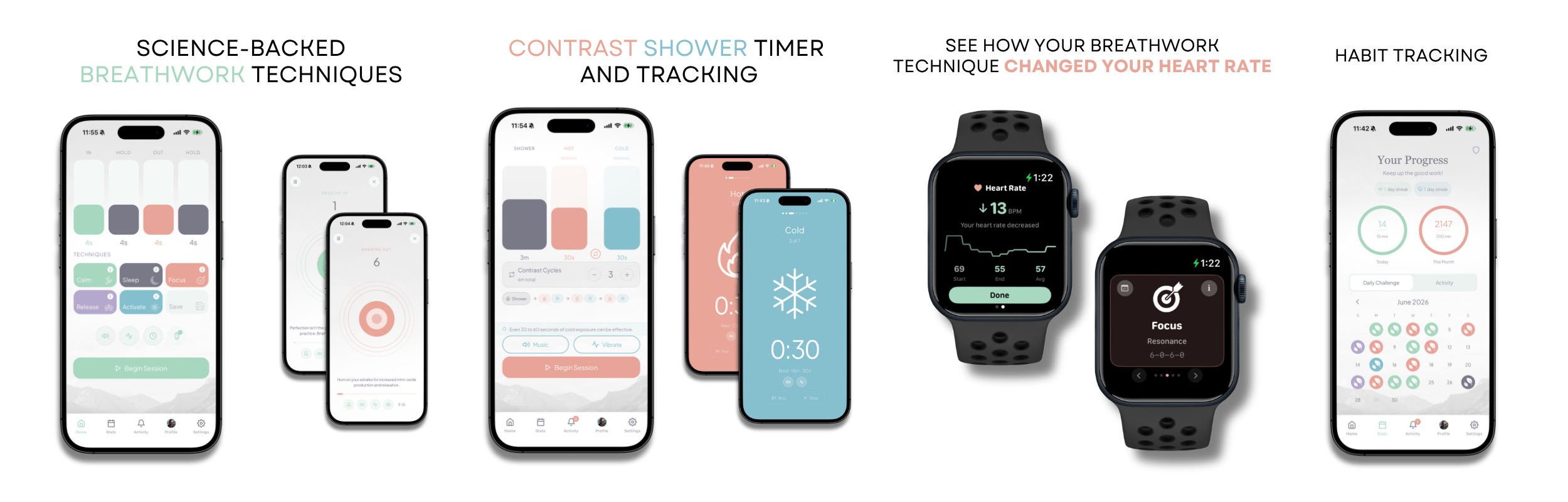
If you want to build a consistent breathwork habit, re-zen: Nervous System Reset includes guided 4-7-8 breathing, box breathing, coherence breathing, physiological sigh, deep breathing, and Activate breathwork in one app.
With an Apple Watch companion app that lets you watch your heart rate respond in real time, plus guided journaling, contrast shower timers, habit tracking, and progress calendars, re-zen makes it easy to choose the right breathing technique for the moment—and build healthier habits every day.