Getting better sleep isn’t about finding one magic supplement or viral sleep hack. Research consistently shows that the habits you practice during the hour before bed have a significant impact on how quickly you fall asleep and how well you recover overnight.
If you’re looking to improve your sleep naturally, here’s a simple, science-backed bedtime routine that takes about 30 minutes and focuses on preparing your nervous system for rest.
1. Dim the Lights
Your brain relies on light cues to regulate your internal clock. Bright overhead lights and screens in the evening can delay melatonin production, making it harder to feel sleepy.
About an hour before bed:
Turn off bright lights.
Use lamps or warm lighting.
Reduce screen brightness or enable Night Shift/Night Mode.
Creating a darker environment tells your brain that it’s time to wind down.
2. Put Your Phone Away
Social media, emails, and news keep your brain engaged when it should be slowing down.
Instead of scrolling in bed, spend the last 20–30 minutes of your evening doing something calming like reading, stretching, or practicing breathwork.
3. Spend 5 Minutes on 4-7-8 Breathing
One of the simplest ways to prepare for sleep is by lowering physiological arousal before bed.
Slow breathing techniques like 4-7-8 breathing can increase parasympathetic (“rest and digest”) activity while helping reduce the racing thoughts and elevated heart rate that often make it difficult to fall asleep.
Many people find that just five minutes is enough to create a noticeable sense of relaxation before getting into bed.
4. Journal for Five Minutes
If your brain tends to race at bedtime, journaling can help.
Write down:
Tomorrow’s priorities
Anything you’re worried about
Three things you’re grateful for
Getting your thoughts onto paper can reduce mental clutter and make it easier to relax.
5. Contrast Shower
If you’re prone to ruminations when you lay down to sleep and can’t turn your brain off, there have been studies to suggest taking a contrast shower before bed can neutralize these anxious thoughts.
A contrast shower is when you alternate between a hot and cold shower (usually in 30 minute intervals) and has profound effects on your circulation and stress resilience as a result of the pumping effect that it creates on your vasculature.
6. Avoid Caffeine and Large Meals Late at Night
Caffeine can remain in your system for hours, while heavy meals close to bedtime may make it harder to get comfortable.
If possible:
Stop caffeine by early afternoon.
Finish dinner at least a few hours before bed.
Limit alcohol if you notice it disrupts your sleep.
7. Be Consistent
One of the most effective sleep habits is also the simplest.
Going to bed and waking up at roughly the same time every day helps strengthen your circadian rhythm, making it easier to fall asleep naturally over time.
Consistency often matters more than having the “perfect” bedtime.
Why This Routine Works
Each of these habits supports the same goal: helping your nervous system transition from a state of alertness into one of recovery.
Instead of trying to force sleep, you’re creating the conditions that allow sleep to happen naturally.
Small habits repeated every night often produce better long-term results than dramatic changes that are difficult to maintain.
Make Your Bedtime Routine Automatic
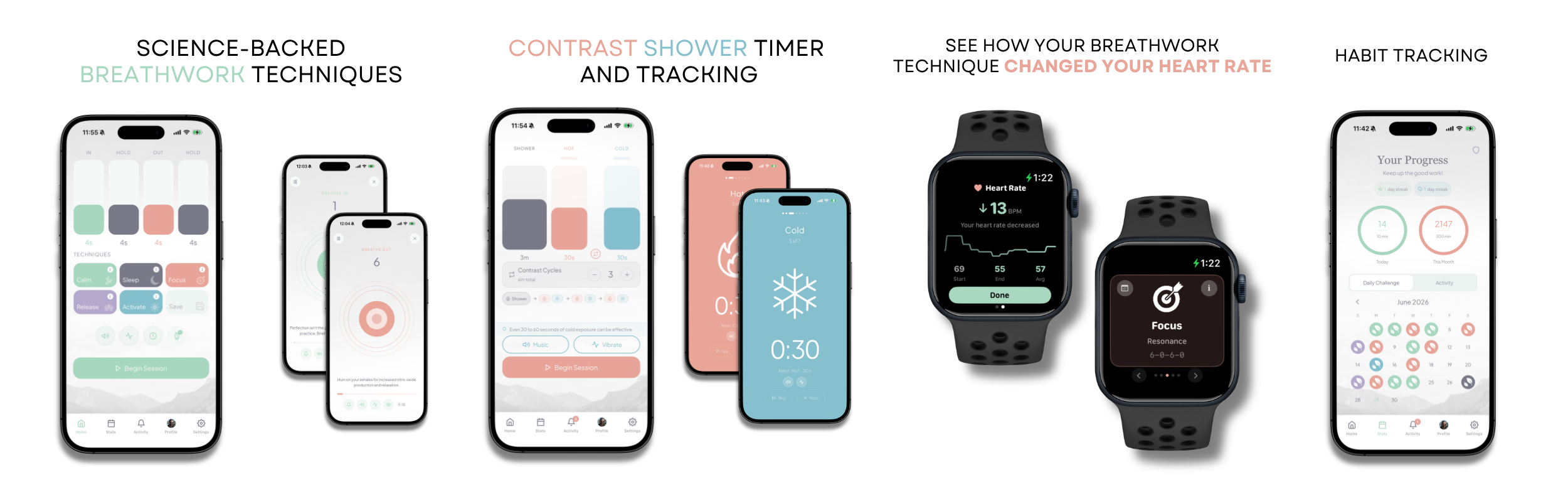
If you’re looking for an easier way to build these habits, re-zen: Nervous System Reset brings several of them together in one app.
You can follow guided 4-7-8 breathing, coherence breathing, box breathing, and other science-backed breathing techniques while using the Apple Watch companion app to watch your heart rate respond in real time. The app also includes guided journaling, habit tracking, progress calendars, and daily reminders that make it easy to stay consistent.